
When Do You Start Paying on a Construction Loan?
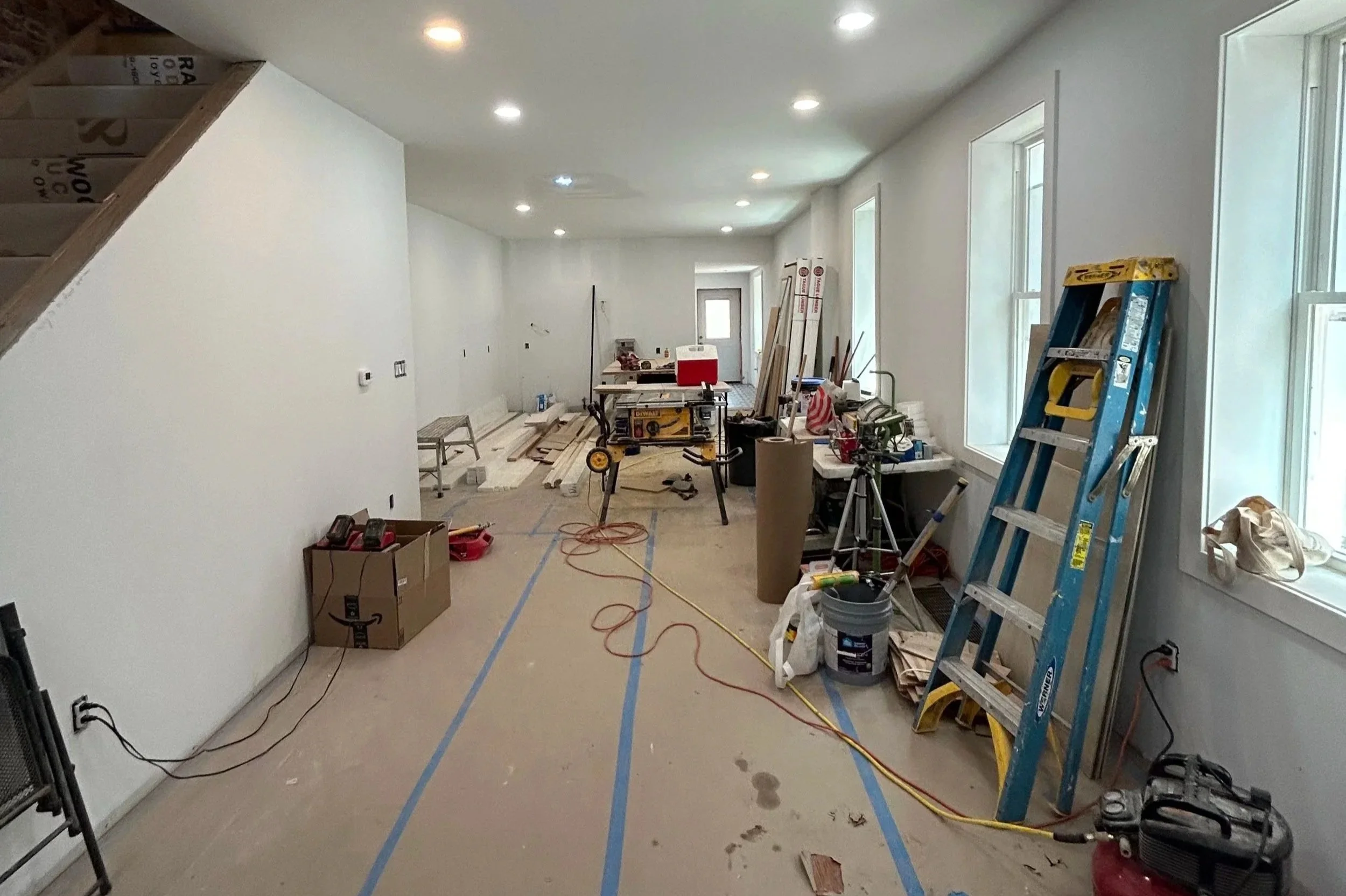
A common question from new borrowers is: When do payments actually start on a construction loan, and how are monthly payments calculated?
Understanding the answer is an essential part of budgeting for a project and accurately estimating holding costs. Unlike a traditional mortgage, a construction loan doesn't require you to make payments on the full approved loan amount from day one. Instead, your monthly interest payment is based only on the funds that have actually been disbursed, typically the amount advanced at closing, plus any construction draws released as the project progresses.
The Payment Timeline During the Build Phase
When you close a loan with Direct Mortgage Loan Company, a portion of the loan is typically disbursed at closing to fund a portion of the purchase or a cash out refinance. If there is a construction element, the rest is held back and released in stages, called draws, as work is completed.
Here's how that shapes your monthly payment:
Interest-only payments follow closing. On most purchase and construction loans, Direct Mortgage Loan Company funds 75% of the purchase price (65–70% on raw land, since undeveloped lots carry more risk). On a free-and-clear property construction refinance, some funds are typically disbursed at closing to cover costs. At closing, a portion of the loan proceeds is also held back to cover your first interest payment, which is billed on the first day of the month following closing. Your first out-of-pocket payment is typically due the following month. It's also important to understand that interest payments are made in arrears, meaning you pay for the previous month's interest. For example, interest that accrues during April is billed and due on May 1.
Construction draws build on top of that. The remaining loan amount is held back for construction and released in draws as work is completed. So your payment has two layers: interest on the closing disbursement from day one, plus additional interest on each construction draw as it's released.
The principal comes due at the end. The full balance is typically due when the construction term wraps, usually 12 months out. Loan extensions are offered as needed, typically in 3 or 6 month increments. Most borrowers handle this by refinancing into a permanent mortgage or selling the completed property.
How to Calculate the Monthly Payment
Because construction loans are interest-only during the build phase, the math is straightforward:
Outstanding balance × interest rate ÷ 360 × days in the month = monthly payment
As each new draw is released, the balance grows, and so does the payment. This is why holding cost projections should be built as a schedule, not a flat number: model out your anticipated draw timeline draw-by-draw, and the payment ramps with it rather than sitting at one fixed figure for the life of the project.
What About an Interest Reserve?
An interest reserve is money set aside up front to cover monthly interest payments during construction, so the borrower isn't paying out of pocket as the project progresses. Direct Mortgage Loan Company typically doesn't require an interest reserve, but it's an option we can structure depending on the fundamentals of the project. There are two ways it can be set up:
Borrower-funded: the borrower brings the reserve to closing as part of their equity in the deal.
Lender-funded: the reserve is built into the total loan amount, so it's disbursed from the loan itself to cover interest payments, rather than the borrower paying from a separate source. Lender funding of the interest reserve is only available when there's enough equity in the deal to support it.
Whether a reserve makes sense, and which structure fits, depends on things like the borrower's cash flow during the build, the project timeline, and overall deal strength.
Key Milestones That Trigger Draws
Beyond the funds disbursed at closing, the rest of your loan is held back for construction and released only after a physical milestone is verified on-site. Because you're paying interest on the active balance, each completed phase brings a predictable step up in your monthly payment. Direct Mortgage Loan Company is known for its flexibility around draw schedules, but a typical draw schedule follows these stages:
Site preparation and foundation: excavation, land clearing, footings, and foundation walls.
Framing and building shell: subfloors, studs, roof trusses, and exterior sheathing.
Mechanical systems and rough-ins: HVAC ductwork, electrical, and plumbing lines, run before the walls close up.
Interior finishes: drywall, paint, interior doors, flooring, and cabinetry.
Final mechanical and exterior details: light fixtures, plumbing fixtures, appliances, siding, and landscaping. The home stretch before final inspection.
Closed Permits: any construction holdback will be released with a Certificate of Occupancy or proof of closed permits.
Why a Local Lender Makes This Process Easier
The draw process only works well when the lender behind it moves at the same pace as your job site. When looking for capital for construction loans in Philadelphia, a local, private lender with decades of experience like Direct Mortgage Loan Company is a great asset. Here's what that looks like in practice:
Draw inspections happen locally, and fast. We schedule and complete inspections in-house, so a milestone getting verified doesn't mean waiting weeks for funds to reach your builder.
We underwrite with local knowledge. We know Philadelphia neighborhoods, zoning quirks, and permitting timelines, and we factor that into how we evaluate a project.
Terms are straightforward. You'll know your draw schedule, your rate, and your terms up front. No surprises buried in the fine print.
You talk to the people who fund the loan. When something on-site changes, a material delay, an inspection that needs to be rescheduled, you're calling someone who can actually make a decision, not a call center.
In construction, timing is everything. Contractors expect to be paid promptly once a phase wraps so they can move materials and crews to the next one. A slow draw doesn't just cost you time, it raises your carrying costs and strains relationships with the people building your project. Keeping capital moving at the same speed as the job site is what lets experienced investors close out builds faster and get to their next project sooner. If you're looking for a reliable construction lender in Philadelphia, working with a team that understands local building timelines and permitting realities makes a real difference in keeping your project on schedule.
The Bottom Line on Your Monthly Payment
Understanding your draw schedule is essential to understand your payment. Because you're only paying interest on funds actually disbursed, and only on an interest-only basis, your monthly outlay during construction is often lower than borrowers expect when they first see a hard money rate. A higher rate on an interest-only payment can still mean a smaller monthly payment than a lower rate amortizing over 30 years, since none of that payment is going toward principal.
Knowing how the balance builds draw by draw, and planning your holding costs around that ramp rather than a flat number, is what makes the rate on a construction loan far less intimidating than it looks on paper. Direct Mortgage Loan Company provides clear financing structures to fit your project timeline, so reach out to us today to get started on your construction quote.