
Are Land Loans Easy to Get? What Developers Need to Know
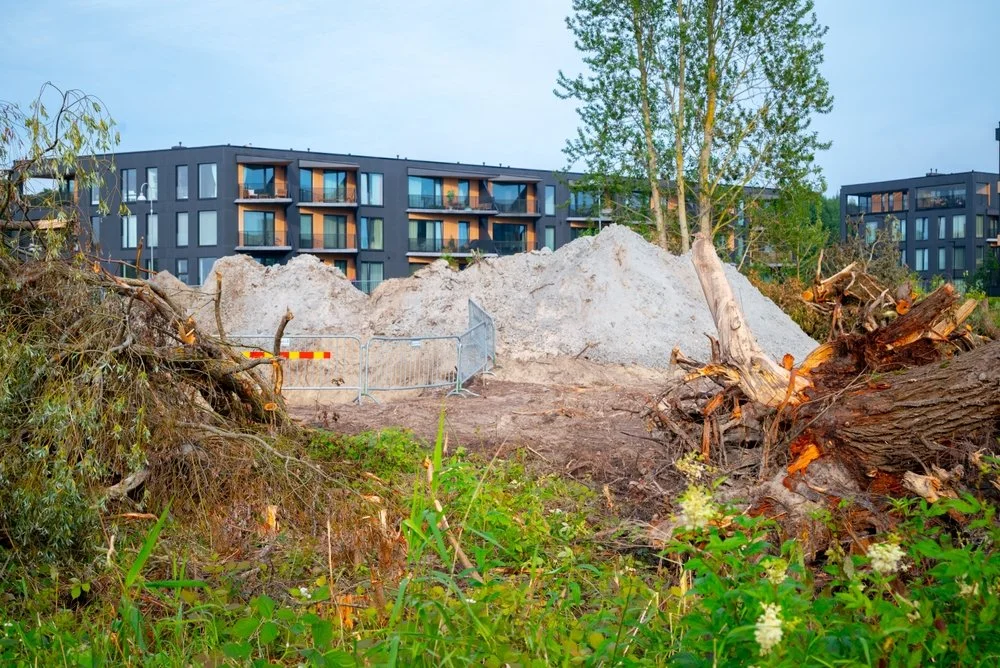
Financing raw land or a vacant lot is a fundamentally different exercise than financing a finished building. Many investors assume that because land is cheaper than a completed structure, getting a loan against it should be straightforward. It isn't. And understanding why will help you avoid wasting your time, or losing a deal while you wait on the wrong lender.
Why Land Financing Is Genuinely Harder
Raw land is widely considered the hardest and most expensive type of real estate to finance, in large part because there's no structure to use as collateral. Many conventional lenders, or even hard money lenders, won't touch it at all. The ones who will typically require large down payments and impose terms that can make the numbers difficult to pencil. Rejection rates for raw land loans are very high, and the lenders who do approve them often do so on terms that don't work for an active developer trying to move quickly. Improved or shovel-ready land is somewhat easier, but even then, many lenders would rather pass.
The reasons are straightforward. A finished building can be sold to a broad pool of buyers if a lender needs to recover. Raw land has a much narrower market and a less predictable value. Fewer buyers are looking for raw land, which can make it difficult to sell and convert to cash. Development timelines add another layer of uncertainty; zoning approvals, permitting, and site work can stretch a project by months or years.
That's the reality. It's not a reason to avoid land. It's a reason to find the right financing partner before you go under agreement.
What a Local Private Lender Can Actually Do
At Direct Mortgage Loan Company, we fund land. That means raw land with no improvements, shovel-ready lots where the entitlements are in place and construction is imminent, parcels that need to be subdivided into individual buildable lots, and assemblages where you're consolidating multiple parcels into a single developable site. These are all different situations with different timelines and different capital needs, and we've worked through all of them.
We also fund the predevelopment costs that follow acquisition. Permits, architectural plans, environmental reports, utility extensions, legal costs. These are real carrying costs that can add up quickly between the day you close on the land and the day construction starts, and having a lender who can cover them keeps your liquidity where it belongs.
Our underwriting is based on the asset and your exit strategy, not on endless documentation. We can lend up to 70% of the as-is value of the land, and we make decisions the way a local lender should: by looking at the property, understanding the market, and having a real conversation with the borrower.
From Land Through Construction
For many projects we fund the full cycle, from acquisition, to predevelopment, and construction. We do this on single-family new construction, small mixed use, commercial, and midsized multifamily developments.
When it comes to construction lending specifically, Direct Mortgage Loan Company has a reputation for being simply the fastest and most flexible local option. Draws are handled in-house, which means no waiting on a third-party servicer to inspect, approve, and cut a check while your contractor is standing by. When a draw is due, we move. We've been doing this long enough to know that construction never goes exactly to plan, and our loan structures reflect that. We work with borrowers through the realities of a live project rather than holding them to a rigid schedule.
For larger commercial projects where loan size and timeline favor institutional capital, a bank construction loan often makes more sense. We're not trying to be the right lender for every phase of every deal. But for a lot of what we see, infill lots, ground-up residential, small to mid-size multifamily, we can take a borrower from raw land all the way to a finished building.
Some borrowers use us for the land acquisition, securing entitlements, and then refinance into a bank for construction. Others take the project from start to finish with us. We're flexible because no two deals are the same.
What to Have Ready Before You Call
Because we're lending on the property's potential, the cleaner your package, the faster we move. A few things that make a real difference:
Zoning and entitlements: Is the parcel already zoned for your intended use or does it require a variance? Where are you in that process? We want to understand the path forward.
Utility access: Whether utilities run to the curb or need to be extended affects both your budget and our valuation. Know the answer.
Environmental status: A Phase I environmental report removes a lot of uncertainty. If you don't have one, we can talk through timing.
Your plan: It doesn't have to be finished drawings. Even a rough site layout and a clear explanation of your exit strategy goes a long way. Are you buying and building? Refinancing into a bank loan? Selling entitled lots to another developer? All of those are legitimate, we just want to understand the path.
The Local Market Piece
Geography matters with land. Rural parcels with no infrastructure are harder to underwrite than urban infill lots in markets with proven demand. For developers looking at hard money loans in Fishtown or similar infill opportunities across the region, the fundamentals are strong right now. Finished inventory is short, buyers are active, and lenders who know the market can move quickly.
That last part matters. A lender who knows which blocks are transitioning, what realistic end-values look like, and how the local permitting process actually works is a very different partner than one evaluating your project from a call center in another time zone. We've been lending in this market since 1956. We know the neighborhoods, we know the numbers, we are not afraid to fund land, and when a deal makes sense, we move quickly to get it done
The Bottom Line
Land loans are not easy to get. But they're not impossible if you approach them correctly. Bring us a deal with a clear plan, understood entitlements, and a realistic exit. We'll tell you quickly whether it's something we can structure, and if it is, we'll move fast. Contact us to talk through your next lot acquisition.